Your Booking has been received. Tripsopedia will be in touch with you.
Uganda's largest and oldest protected area, where the entire Victoria Nile is forced through a 7-metre gorge to form the world's most powerful waterfall.
Murchison Falls National Park is Uganda's largest conservation area, spread across 3,893 square kilometres of palm-dotted plains where the Bunyoro Escarpment meets the northern Albertine Rift Valley. It is also the country's oldest protected area, first set aside as a game reserve in 1926, and formally established under the 1952 Uganda National Parks Act. Winston Churchill visited in 1907 and famously described it as a Kew Gardens crossed with a wildlife sanctuary, a fair description of a park that mixes savannah, forest, and river in one dramatic setting.
The park sits within easy reach of Kampala, bordering Buliisa, Kiryandongo, and Nwoya districts. The nearest town, Masindi, is about 72 km from the park boundary, and the Paraa area, its tourism hub, is roughly 283 km, or 5 to 6 hours by road, northwest of the capital. The Victoria Nile runs straight through the park for around 115 km, splitting it into a northern and southern bank before eventually reaching Lake Albert.
Murchison holds four of the Big Five and 76 recorded mammal species in total, alongside 451 confirmed bird species, among them the rare and much sought-after shoebill stork. Add in a Nile stretch thick with hippos and crocodiles, and it is easy to see why this remains one of Uganda's most complete safari destinations.
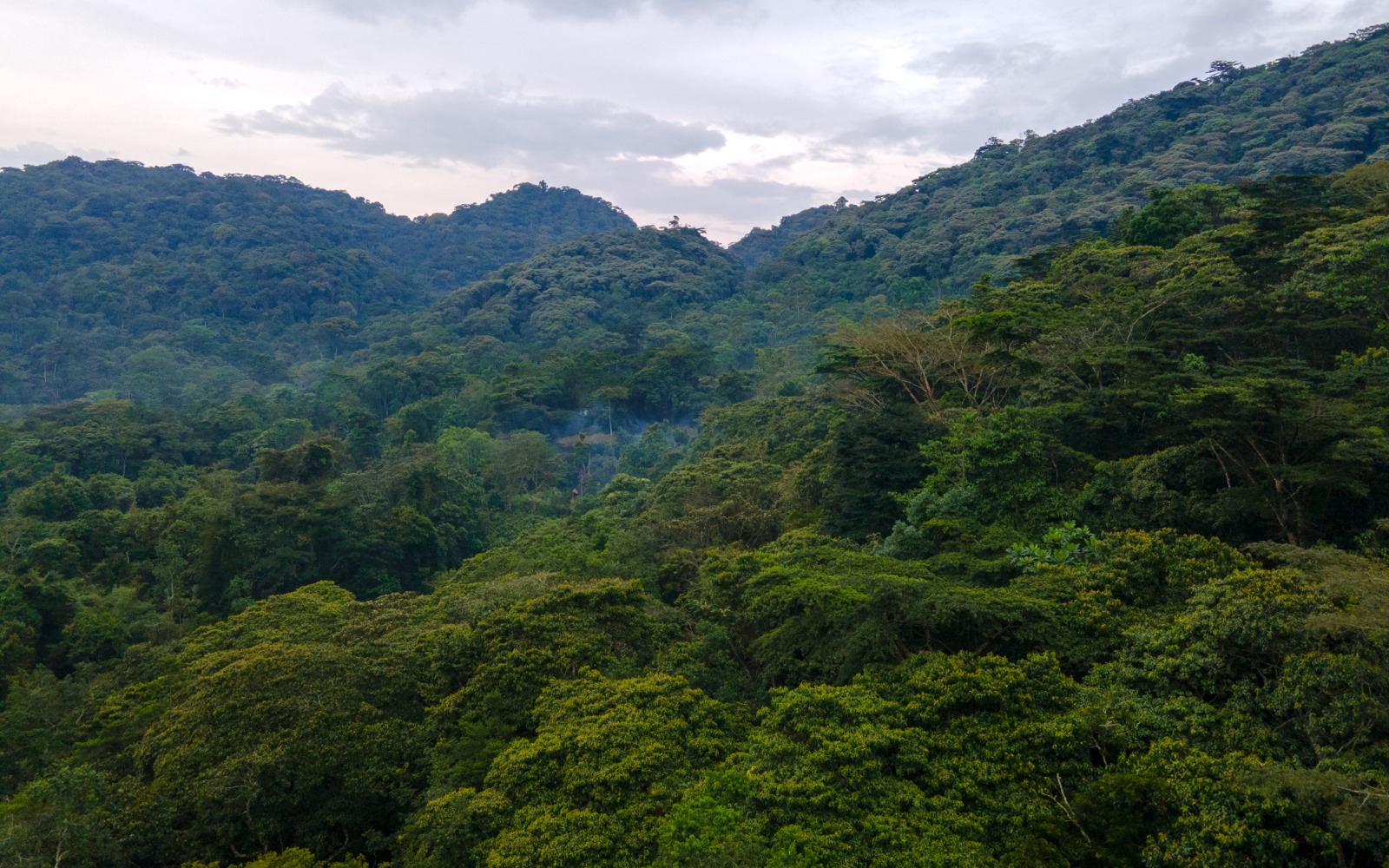
Murchison sits at the point where the vast Acholi plains meet the Bunyoro Escarpment, split down the middle by the Victoria Nile. That geography is exactly what gives the park its range of habitat, from riverine forest and papyrus swamp to open savannah, and its correspondingly wide mix of wildlife.
Murchison Falls, also known as Kabarega Falls, is where the entire Victoria Nile is squeezed through a gorge just 7 metres wide before dropping 43 metres in a single thunderous plunge. More than 300 cubic metres of water force through that narrow gap every second, throwing a fine mist over 50 metres into the air and, on a clear day, painting a permanent rainbow across the gorge.
Beside the main falls sits Uhuru Falls, a second waterfall formed in 1962 when the Nile burst its banks during unusually high floodwaters. Together, the two falls make for one of the most photographed sights in Uganda, and one of the very few places on earth where you can watch an entire river forced through a gap you could comfortably throw a stone across.
Murchison's mix of savannah, forest, swamp, and river supports one of Uganda's widest ranges of wildlife, on land, on the water, and in the air.
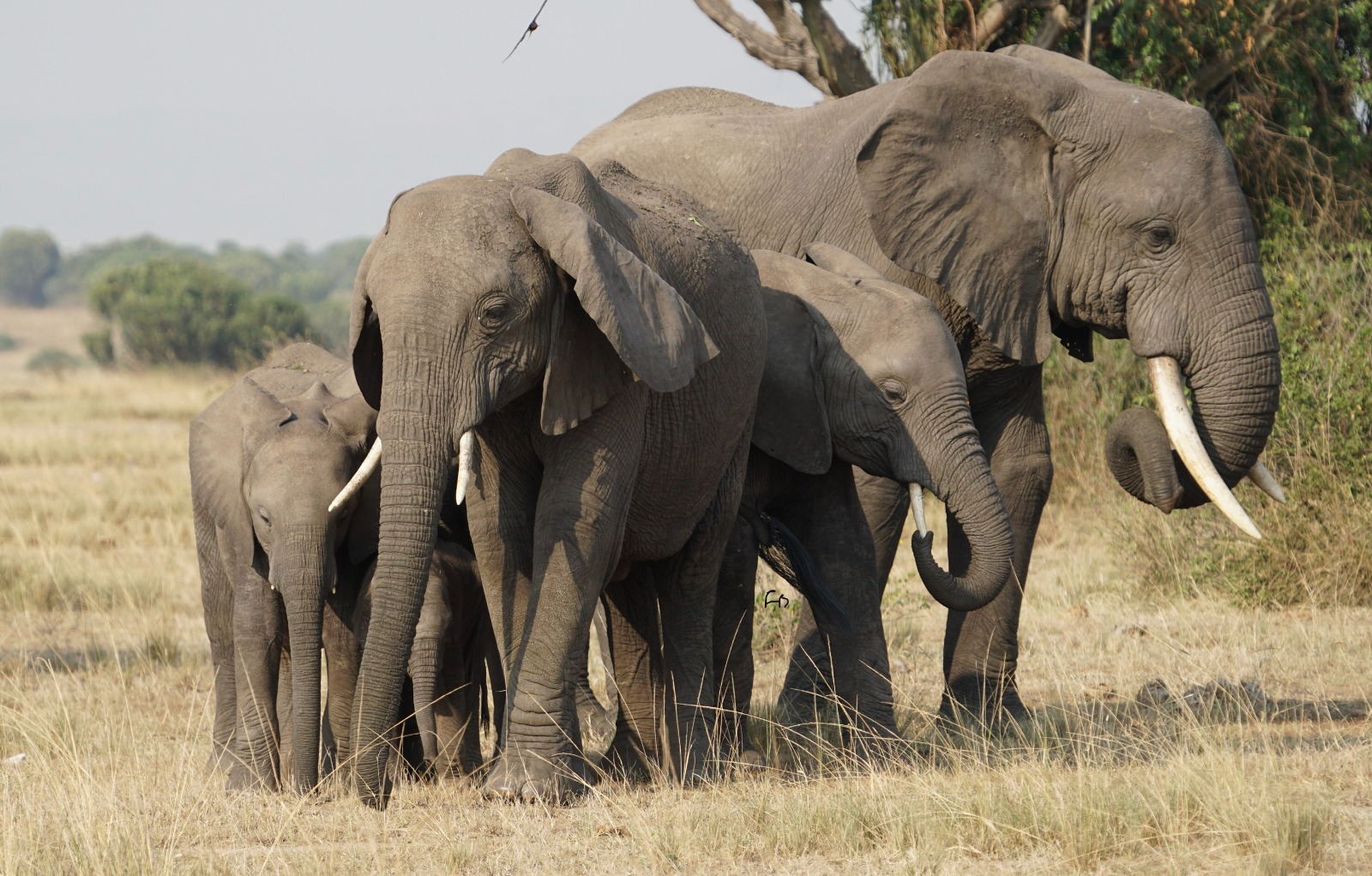
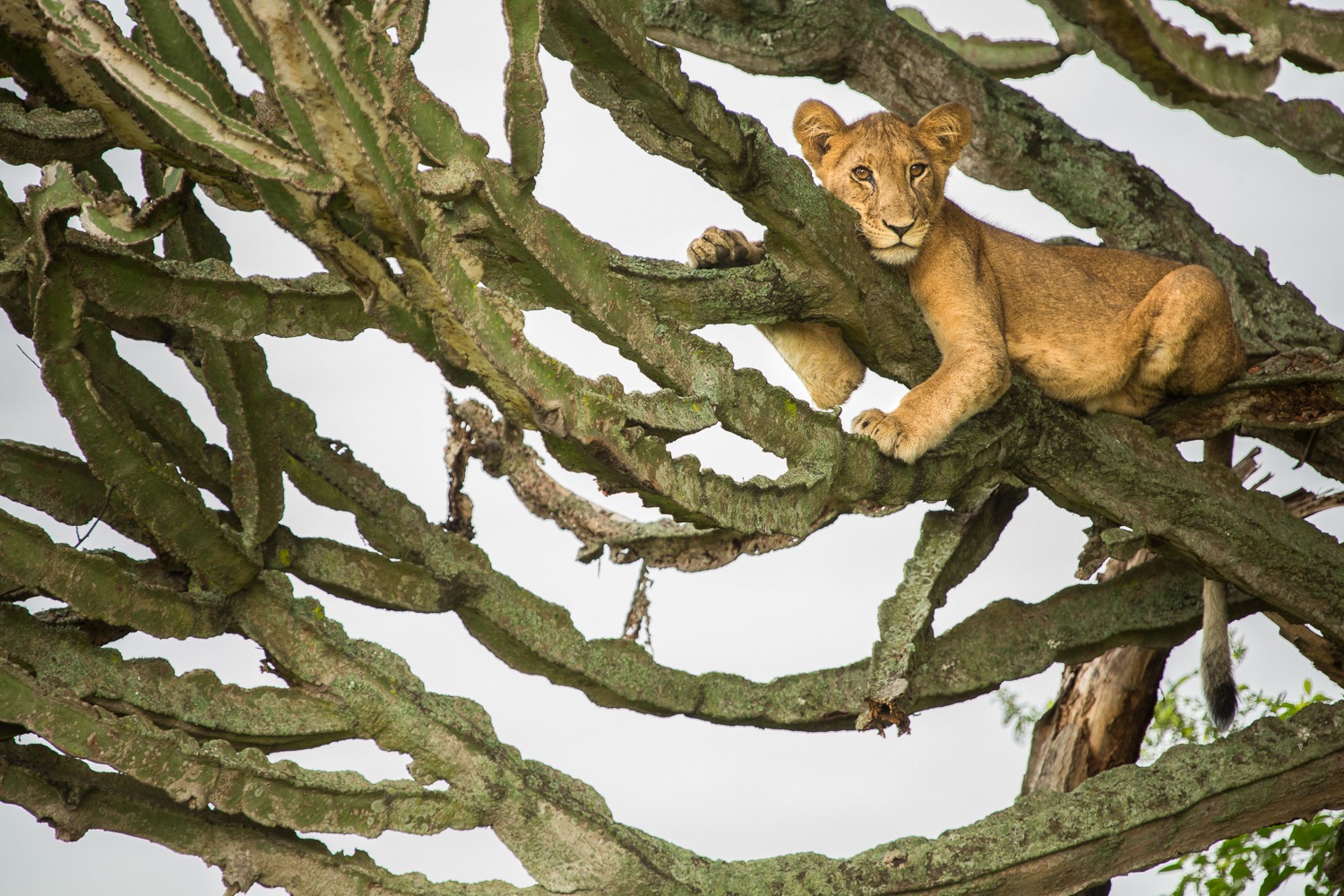
Lions, leopards, elephants, and buffaloes all roam Murchison in solid numbers, alongside reticulated giraffes, Uganda kob, oribis, waterbuck, Jackson's hartebeest, bushbuck, olive baboons, warthogs, and several monkey species.
Budongo Forest, on the park's edge, holds a population of habituated chimpanzees, while the nearby Ziwa Rhino Sanctuary is Uganda's only place to see white rhinos, an easy add-on for most Murchison itineraries.
The Nile's northern bank draws hippos, wildebeest, baboons, Nile monitors, and giant Vundu catfish, plus elephants and buffalo coming to drink, and the Nile crocodile, one of the park's most formidable residents.
Among 451 recorded bird species, the prehistoric-looking shoebill stork is the one every birder wants, most often found around the Nile Delta at Lake Albert.
Uganda's largest bird, the Goliath heron, and its national bird, the grey crowned crane, both turn up regularly, alongside giant kingfishers, nightjars, and Denham's bustard.
Murchison's mixed ecosystems, from river to forest to open grassland, are exactly why the bird count runs so high, with a further 19 unconfirmed species still possible for a keen birder to add to the list.
Paraa, meaning "hippo" in the local Luo language, is Murchison's centre of activity. Every route through the park converges here, including the passenger ferry linking the northern and southern banks. Game drives, the park museum, craft shopping, boat cruises, and nature walks all radiate out from Paraa.
Running 120 to 170 km between the Victoria and Albert sections of the Nile, the Buligi tracks are Murchison's premier game-viewing circuit, crossing open plains, palms, acacia, and riverine vegetation where wildlife is thickest at dawn and dusk.
Kaniyo Pabidi, 8 km past Kichumbanyobo Gate, offers chimpanzee tracking alongside blue monkeys, black-and-white colobus, and olive baboons, plus lions, elephants, buffalo, and leopards that pass through. Its bird list includes species found nowhere else in Africa, such as the chocolate-backed kingfisher. Rabongo Forest, a smaller 4 km² pocket further south, adds medicinal plant walks and further birding.
Where the Victoria Nile empties into Lake Albert, papyrus-lined banks host Goliath herons, African fish eagles, great egrets, and, with good luck, the rare shoebill, making this one of the standout birding stops on the boat cruise.
Murchison's northern bank offers the strongest game viewing, across three main tracks, the Albert, Victoria, and Buligi. Morning drives start around 6:30am, when grazers are out and predators are hunting, and evening drives head out from 4pm before darkness sets in. Expect 3 to 4 hours in the field, extendable to 5 on request, in a 4x4 with a pop-up roof for photography. Self-driving is permitted with a park ranger guide.
A boat cruise along the Nile is one of Murchison's signature experiences, typically run to the base of the falls, or separately toward the Lake Albert Delta for prime shoebill territory. Either route brings you close to hippos, crocodiles, and a steady stream of birdlife along the banks.
Around 15 km from the Paraa-Masindi road near Sambiya River Lodge, a footpath follows the Nile as it crashes through the gorge, with a further 20-minute stretch to a saddle overlooking both Murchison and Uhuru Falls. Allow roughly two hours, ideally in the afternoon for the best light.
Rabongo Forest and Kaniyo Pabidi both offer guided walks strong on birds and primates. The Victoria Nile Delta walk, 2 to 4 hours, is a solid bet for the shoebill, while the classic hike from the base of the falls to the top takes about 45 minutes, following the Nile the whole way up.
The Victoria Nile is well known among anglers for Nile perch and tigerfish. We can arrange guided fishing excursions timed around your wider itinerary in the park.
Communities around Murchison span both northern Nilotic and southern Bantu groups. The Mubako dancers showcase traditional music, dance, and drama, and village tours give a closer look at local craft and daily life around the park.
From five-star riverside lodges to simple tented camps, we match accommodation to your budget and preferred bank of the Nile.
| Tier | Lodges |
|---|---|
| Upmarket / Luxury | Chobe Safari Lodge (21 luxury tents, 36 guest rooms, 4 presidential suites, overlooking Karuma Wildlife Reserve), Paraa Safari Lodge (54 en-suite rooms on the Nile, where "The African Queen" was filmed), Baker's Lodge |
| Midrange | Sambiya River Lodge, Fort Murchison Lodge, Heritage Safari Lodge, Pakuba Safari Lodge, Yebo Safari Camp |
| Budget | Red Chilli Rest Camp, Geo Lodges Shoebill Campsite, UWA Bandas |
Murchison can be reached from Kampala via Masindi in the south, or from the Karuma-Pakwach road in the north.
About 85 km, 2 to 3 hours' drive from Masindi town, which is itself roughly 72 km from the park.
A longer 135 km approach, but one that rewards with striking Rift Valley scenery along the way.
Branches off the Kampala to Gulu highway near Karuma Bridge, with access through Tangi Gate (110 km west of the bridge), Chobe Gate (2 km north), or Wankwar Gate (10 km off the main road).
Scheduled domestic flights connect Entebbe International Airport to Bugungu and Pakuba airstrips, with charter options also available from Kajjansi airstrip in Kampala on request.
Game viewing holds up year round thanks to Murchison's naturally short grass, but the dry seasons, June to August and December to February, give the clearest long-distance views and easiest road conditions.
Most travellers apply for Uganda's e-visa online ahead of arrival. Visas are also available on arrival at Entebbe International Airport. Ask us about the East Africa Tourist Visa if you are continuing into Rwanda or Kenya.
The best game viewing sits on the northern bank. If your lodge is on the southern side, plan on an early ferry or road transfer to reach the prime game-drive tracks, we build this into your itinerary automatically.
A few of the itineraries our travellers book most often around Murchison Falls. Every trip can be adjusted to your dates, pace, and budget.